Trinity River Crossings
Every utility that has to get from one side of this metro to the other eventually meets the Trinity — the West Fork through Fort Worth, the Elm Fork down through the Dallas floodway, the East Fork past Rockwall and Kaufman. Crossing it is the signature bore of the market: long shots, engineered profiles, and a permitting picture that includes floodway authorities alongside the usual ROW owners.
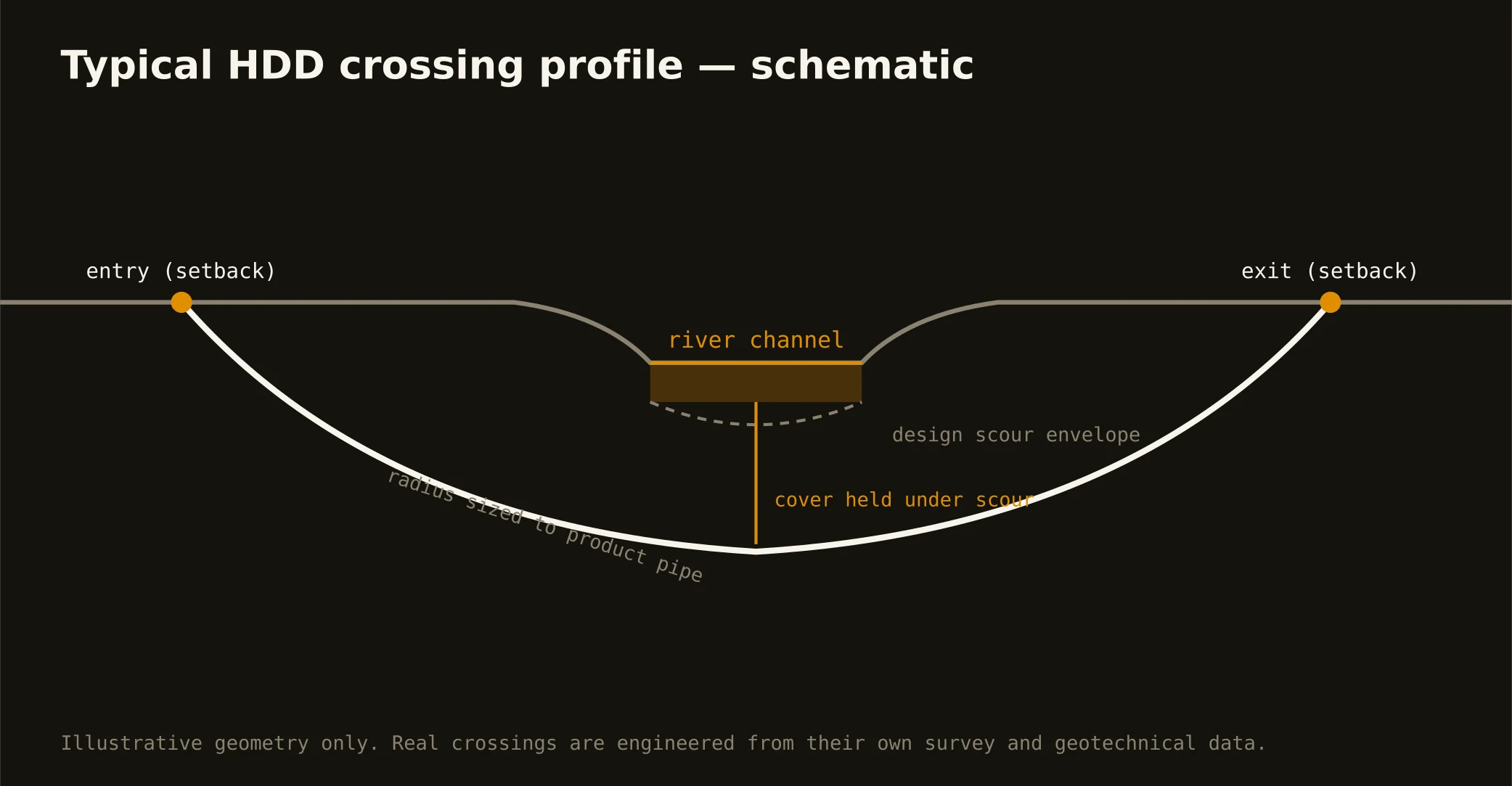
The technical shape of the work: setback entry and exit outside the levees or banks, a profile that holds cover under the scour zone, and a mud program planned for alluvial sands and gravels that behave differently than the upland clay fifty feet away. Inadvertent-return monitoring on a river crossing isn't a formality — containment and response are written into the bore plan before the pilot starts.
Levee and floodway touches bring the levee districts and, on regulated segments, federal review into the timeline. Those clocks are real; we scope them up front so the price and schedule you approve already contain them.